

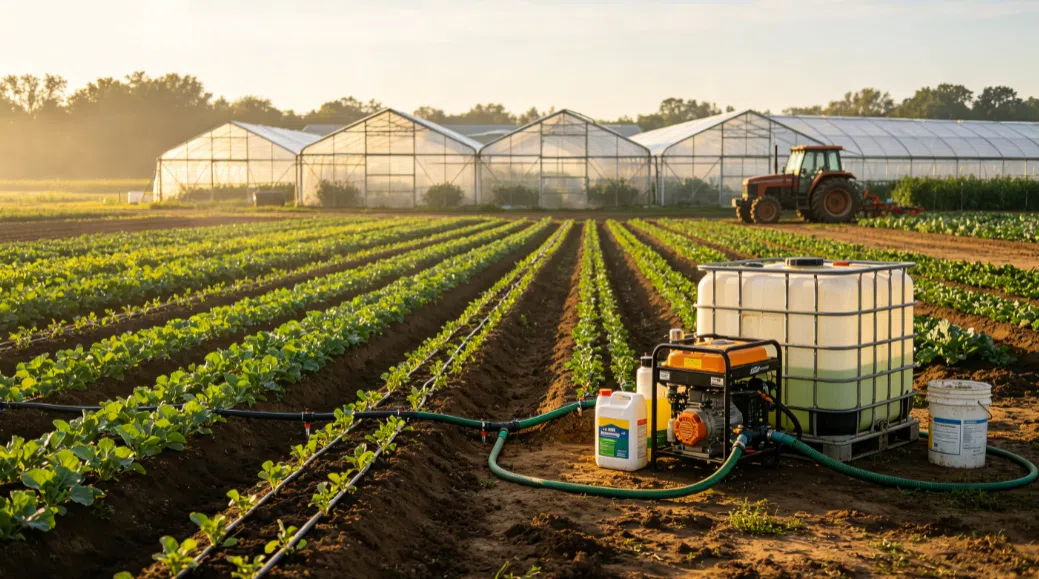
Agrochemicals are an essential part of modern agriculture and play an important role in crop protection, fertilizer production, plant nutrition, soil management, seed treatment, irrigation, and agricultural production. By using different types of chemical raw materials, active ingredients, and functional additives, agrochemical products can help improve nutrient efficiency, support crop growth, and manage pests, diseases, and weeds.
1. Fertilizers and Plant Nutrition
Fertilizers are one of the most important application areas for agrochemicals.
Nitrogen, phosphorus, potassium, and micronutrients provide crops with essential nutrients for healthy growth. Phosphoric Acid and phosphate-based materials are widely used in the production of phosphate fertilizers, compound fertilizers, and water-soluble fertilizers.
Different fertilizer formulations can be developed according to crop requirements, soil conditions, and different stages of plant growth.
2. Crop Protection
Crop protection is another major application of agrochemicals.
Pesticides are used to help manage insects, plant diseases, fungi, weeds, and other agricultural pests. Agrochemical raw materials can serve as active ingredients or manufacturing intermediates for insecticides, fungicides, herbicides, and other crop protection products.
Properly formulated and responsibly used crop protection products can help reduce losses caused by pests and diseases while supporting crop quality and productivity.
3. Pesticide Formulations and Agricultural Adjuvants
In addition to active ingredients, pesticide formulations often require functional additives to improve their physical and application properties.
Common functions include:
· Wetting
· Dispersing
· Emulsifying
· Thickening
· Stabilizing
· Anti-settling
· Spray performance improvement
Certain surfactants, polymers, and cellulose derivatives can be used in pesticide formulations depending on the specific product and formulation requirements.
4. Water-Soluble and Liquid Fertilizers
The use of water-soluble and liquid fertilizers continues to grow with the development of modern agriculture.
These products can deliver nutrients through irrigation systems or foliar application. Their high solubility and flexible formulation make them suitable for precision fertilization and fertigation systems.
Manufacturers need to consider factors such as solubility, impurity levels, formulation stability, and compatibilitybetween different ingredients.
5. Soil Improvement and Soil Management
Agrochemicals can also contribute to soil management and soil conditioning.
Depending on soil pH, salinity, nutrient levels, and mineral composition, different materials can be selected to help improve soil conditions.
Certain acids, alkaline materials, chelating agents, and related products may be used to support pH management or improve the availability and stability of specific nutrients.
6. Micronutrient Fertilizers
Micronutrients such as iron, zinc, manganese, copper, and boron are required by plants in relatively small quantities but are important for normal plant development.
Organic acids, chelating agents, and complexing agents can be incorporated into micronutrient fertilizer formulations to improve nutrient stability, solubility, and availability.
These materials allow manufacturers to develop specialized nutrient products for different crops and agricultural conditions.
7. Seed Treatment
Seed treatment is an important part of modern crop production.
Seed treatment products can be applied through coating, soaking, or other processes before planting.
Agrochemical products used in seed treatment may support:
· Disease protection
· Pest management
· Nutrient supplementation
· Seed coating
· Early-stage crop protection
Seed treatment formulations generally require careful consideration of product stability, active ingredient concentration, and compatibility with seed germination and early plant development.
8. Plant Growth Regulation
Certain agrochemical products are used in plant growth regulation.
Depending on the active ingredient and applicable regulations, plant growth regulators may be used to influence plant growth, flowering, fruit setting, maturation, and other physiological processes.
These products require precise control of concentration, formulation stability, application method, and dosage. They should always be used according to applicable regulations and product labels.
9. Agricultural Irrigation and Water Management
Modern agriculture increasingly focuses on precision irrigation and efficient water use.
Agricultural water treatment chemicals can be used for irrigation water management, pipeline cleaning, and water-quality control. In drip irrigation, sprinkler irrigation, and fertigation systems, appropriate water management can help reduce problems associated with mineral deposits and equipment blockage.
10. Greenhouses and Protected Agriculture
Greenhouse and protected agriculture create demand for fertilizers, crop protection products, and water treatment materials.
Agrochemicals can be used in:
· Nutrient solution preparation
· Fertigation
· Pest and disease management
· Irrigation water treatment
· Soil management
· Plant growth regulation
By precisely managing nutrients, water, and crop protection, growers can improve production efficiency and crop consistency.
11. Agricultural Films and Packaging Materials
Modern agriculture uses a wide range of plastic films, including mulch films, greenhouse films, silage films, and agricultural packaging materials.
Polymers such as LDPE (Low-Density Polyethylene) offer good flexibility and processability and are widely used in various agricultural film applications.
Depending on the final application, additives such as UV stabilizers and antioxidants may be incorporated to improve weather resistance, durability, and service life.
12. Functional Value of Agrochemicals in Modern Agriculture
The major value of agrochemicals can be summarized in several areas:
· Improving crop nutrient availability
· Supporting pest, disease, and weed management
· Improving soil and irrigation conditions
· Increasing agricultural productivity
· Supporting precision and protected agriculture
· Improving water and fertilizer efficiency
Modern agriculture is gradually moving beyond simply maximizing crop yields toward higher efficiency, precision application, resource conservation, and more sustainable agricultural practices.


