

Product Description
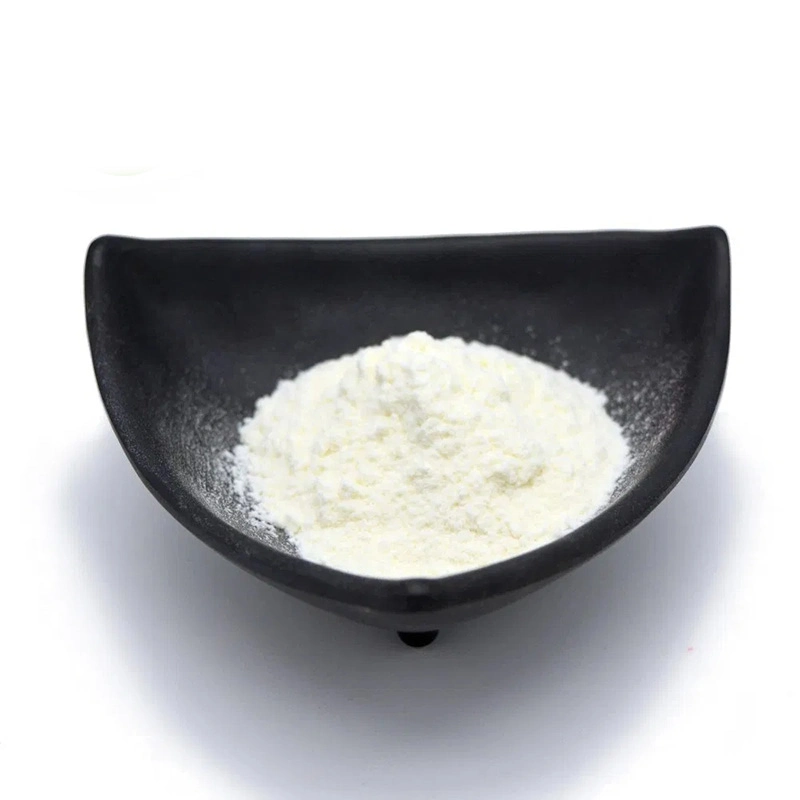
Imidazole (CAS No. 288-32-4), with the molecular formula C₃H₄N₂, is an aromatic nitrogen-containing heterocyclic compound belonging to the diazole family. It consists of a five-membered ring containing two non-adjacent nitrogen atoms and exhibits unique electronic and chemical properties.
Due to the presence of active nitrogen atoms, imidazole demonstrates both proton-donating and proton-accepting abilities, allowing it to react with acids and bases to form various salts. Its chemical behavior combines the characteristics of pyridine and pyrrole, giving it excellent versatility in organic synthesis.
The imidazole ring is an important structural unit in many biologically active compounds. It plays a key role in biomolecules such as histidine, where it contributes to enzyme catalytic activity and acyl-transfer processes. Imidazole derivatives are widely found in biological systems and are extensively studied for applications in pharmaceuticals, biotechnology, and fine chemical manufacturing.
With its outstanding reactivity, biological relevance, and broad synthetic applications, imidazole serves as a valuable intermediate in modern chemical research and industrial production.
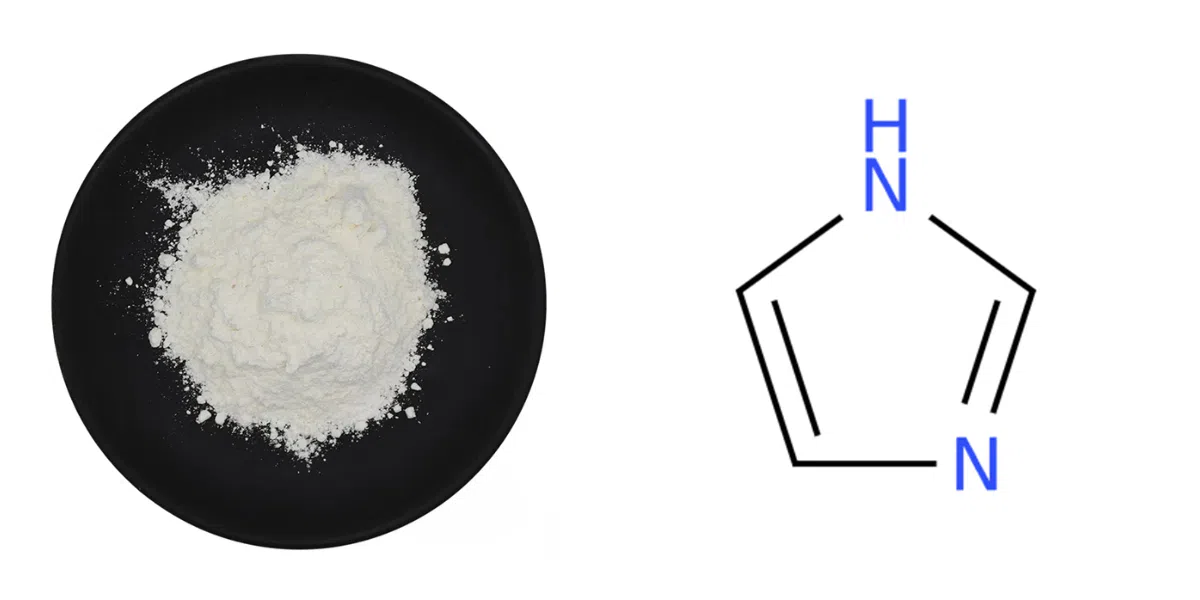
Imidazole Chemical Properties
| Melting point | 88-91 °C(lit.) |
| Boiling point | 256 °C(lit.) |
| density | 1.01 g/mL at 20 °C |
| vapor pressure | <1 mm Hg ( 20 °C) |
| refractive index | 1.4801 |
| Fp | 293 °F |
| storage temp. | Store below +30°C. |
| solubility | H2O: 0.1 M at 20 °C, clear, colorless |
| pka | 6.953(at 25℃) |
| form | crystalline |
| color | white |
| Specific Gravity | 1.03 |
| Odor | Amine like |
| PH Range | 9.5 - 11 |
| PH | 9.5-11.0 (25℃, 50mg/mL in H2O) |
| Water Solubility | 633 g/L (20 ºC) |
| Sensitive | Hygroscopic |
| λmax | λ: 260 nm Amax: 0.10 |
| λ: 280 nm Amax: 0.10 | |
| Merck | 144912 |
| BRN | 103853 |
| Dielectric constant | 23.0(Ambient) |
| Stability: | Stable. Incompatible with acids, strong oxidizing agents. Protect from moisture. |
| InChIKey | RAXXELZNTBOGNW-UHFFFAOYSA-N |
| LogP | -0.02 at 25℃ |
| CAS DataBase Reference | 288-32-4(CAS DataBase Reference) |
| NIST Chemistry Reference | 1H-Imidazole(288-32-4) |
| EPA Substance Registry System | Imidazole (288-32-4) |
| Hazard Codes | C,Xi,T |
| Risk Statements | 36/38-63-34-22-20/21/22-61 |
| Safety Statements | 26-36/37/39-45-22-36-27-53 |
| RIDADR | UN 2923 8/PG 3 |
| WGK Germany | 1 |
| RTECS | NI3325000 |
| Autoignition Temperature | 480 °C |
| TSCA | Yes |
| HazardClass | 8 |
| PackingGroup | III |
| HS Code | 29332990 |
| Hazardous Substances Data | 288-32-4(Hazardous Substances Data) |
| Toxicity | LD50 in mice (mg/kg): 610 i.p.; 1880 orally (Nishie) |
Product Application of Imidazole CAS No. 288-32-4
Imidazole exhibits stronger basicity than pyrazole and readily reacts with acids to form stable salts, such as picrates and nitrates. Due to its unique chemical properties and coordination ability, imidazole is widely used in biochemical research and specialty chemical applications.
One of its important uses is in the purification of His-tagged proteins through immobilized metal affinity chromatography (IMAC). During this process, the histidine residues of His-tagged proteins interact selectively with immobilized metal ions, typically nickel, on the chromatography resin. By introducing an imidazole-containing elution buffer, imidazole competes with the histidine tag for metal binding sites, enabling the target protein to be efficiently released from the resin and collected in a highly purified form.
In addition, imidazole and its derivatives are valuable intermediates in pharmaceutical synthesis, biochemical research, and organic chemistry due to their excellent coordination properties and versatile reactivity.