
Product Description
Natamycin (CAS No. 7681-93-8), also known as pimaricin, is a naturally derived antifungal compound belonging to the polyene macrolide family. It is produced through the fermentation of Streptomyces natalensis and is widely recognized for its excellent antifungal properties.
Natamycin exhibits strong activity against numerous fungal species, including Candida, Aspergillus, Fusarium, Cephalosporium, and Penicillium. Its primary antifungal mechanism involves binding with ergosterol, an essential component of fungal cell membranes, resulting in disruption of membrane integrity and inhibition of fungal growth.
Due to its natural origin and effective antifungal performance, natamycin is extensively used in pharmaceutical formulations for the treatment of fungal infections and in the food industry as a preservative to prevent mold and yeast contamination. It is commonly applied in products requiring reliable fungal protection and quality preservation.
Chemical Properties
| Product Name: | Natamycin |
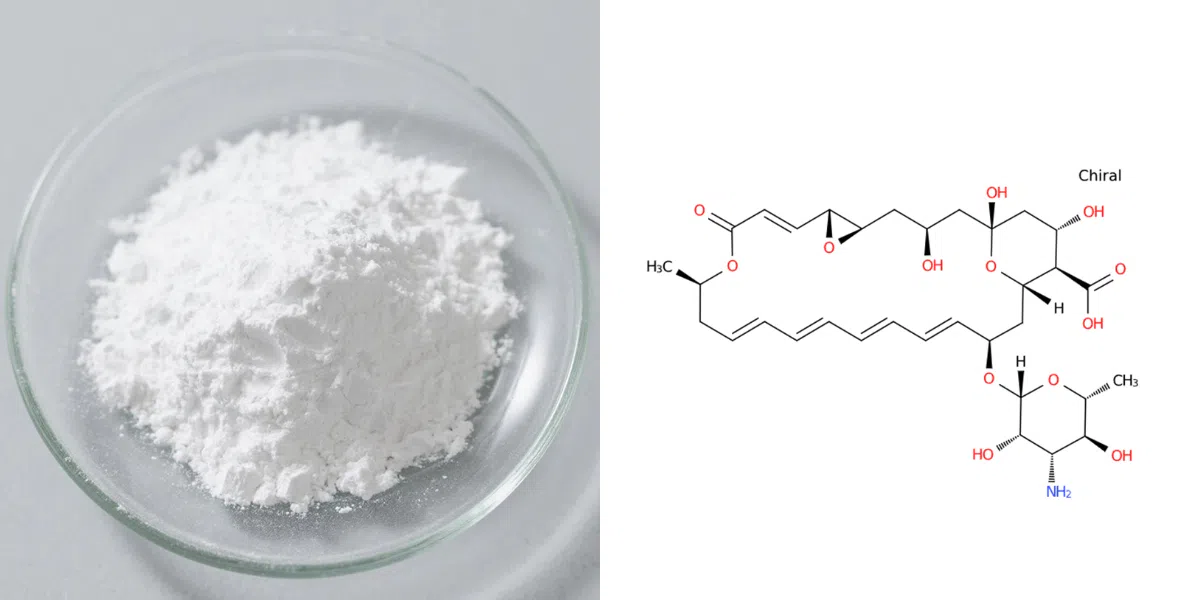
| Synonyms: | NataMycin, A 5283, Delvolan, Delvocid, Myprozine, Natacyn, Natafucin, PiMafucin, PiMafugin, A5263, CL 12625, E235;Natamycin(FermentionProcess);(1R*,3S*,5R*,7R*,8E,12R*,14E,16E,18E,20E,22R*,24S*,25R*,26S*)]-22-[(3-Amino-3,6-dideoxy-β-D-mannopyranosyl)oxy]-1,3,26-trihydroxy-12-methyl-10-oxo-6,11,28-trioxatricyclo[22.3.1.05,7]octacosa-8,14,16,18,20-pentaene-25- carboxylic acid;NATAMYCIN;PIMAFUCIN;PIMARICIN;PIMARICIN, STREPTOMYCES CHATTANOOGENSIS;antibiotica-5283 |
| CAS: | 7681-93-8 |
| MF: | C33H47NO13 |
| MW: | 665.73 |
| EINECS: | 231-683-5 |
| Product Categories: | Food additives;Food & Feed ADDITIVES;Antifungal (Topical);Intermediates & Fine Chemicals;Pharmaceuticals;ERGOSTAT;antibiotic;raw materials;Food additive;7681-93-8 |
| Mol File: | 7681-93-8.mol |
Natamycin Chemical Properties
| Melting point | 2000C (dec) |
| Alpha | D20 +278° (c = 1 in CH3COOH) |
| Boiling point | 952℃ |
| Density | 1.0 g/mL at 20 °C(lit.) |
| Bulk density | 200kg/m3 |
| Refractive index | 1.5960 (estimate) |
| Fp | >110°(230°F) |
| Storage temp | Keep in dark place,Inert atmosphere,2-8°C |
| Solubility | Soluble in DMSO |
| Form | Aqueous suspension |
| Pka | PKa 4.6(50% aq. MeOEtOH) (Uncertain);8.35 (Uncertain) |
| Color | Cream colored |
| Water Solubility | 0.41g/L(21 ºC) |
| Sensitive | Light Sensitive |
| Merck | 13,6453 |
| BRN | 1614878 |
| Stability | Light sensitive |
| InChIKey | NCXMLFZGDNKEPB-FFPOYIOWSA-N |
| LogP | 0.880 (est) |
| EPA Substance Registry System | 6,11,28-Trioxatricyclo[22.3.1.05,7]octacosa-8,14,16,18,20-pentaene-25-carboxylic acid, 22-[(3-amino-3,6-dideoxy-.beta.-D-mannopyranosyl)oxy]-1,3,26-trihydroxy-12-methyl-10-oxo-, (1R,3S,5R,7R,8E,12R,14E,16E,18E,20E,22R,24S,25R,26S)- (7681-93-8) |
Product Application of Natamycin (Pimaricin) CAS No. 7681-93-8
Natamycin is widely used as a natural antifungal coating agent in the food industry, particularly for protecting cheese products from mold and yeast contamination. It is commonly applied to the surface of Italian and other specialty cheeses to help maintain product quality during storage and ripening.
Due to its colorless, odorless, and tasteless characteristics, natamycin does not affect the original flavor, aroma, or appearance of cheese, nor does it significantly penetrate into the product. Its selective antifungal activity effectively inhibits the growth of molds and yeasts while having little impact on beneficial bacteria, allowing the natural fermentation and maturation processes of cheese to continue normally.
Natamycin can be applied through various methods, including surface dipping, spraying, or incorporation into edible cheese coatings. Typical application concentrations range from 300 to 2,000 ppm, depending on the product requirements and processing conditions. Its excellent antifungal performance makes it an effective solution for extending shelf life and maintaining the quality of dairy products.