
Product Description
Poly(methyl methacrylate) (PMMA), also known as acrylic or plexiglass, is a transparent thermoplastic polymer with the chemical formula (C₅H₈O₂)ₙ. It is widely recognized for its excellent optical clarity, good weather resistance, lightweight properties, and ease of processing.
PMMA is synthesized through the polymerization of methyl methacrylate (MMA) monomers, where carbon–carbon double bonds undergo polymerization reactions in the presence of an initiator to form long-chain polymer structures.
By adjusting polymerization conditions, the molecular weight, stereoregularity, and overall material characteristics of PMMA can be controlled to achieve specific performance requirements. Its combination of transparency, processing flexibility, and stable physical properties makes it an important material for applications in optics, displays, construction, automotive components, and specialty plastic products.
With its reliable production process and customizable material performance, isotactic PMMA serves as a valuable polymer material for advanced manufacturing and industrial applications.
Chemical Properties
| English Name | POLY(METHYL METHACRYLATE) ISOTACTIC |
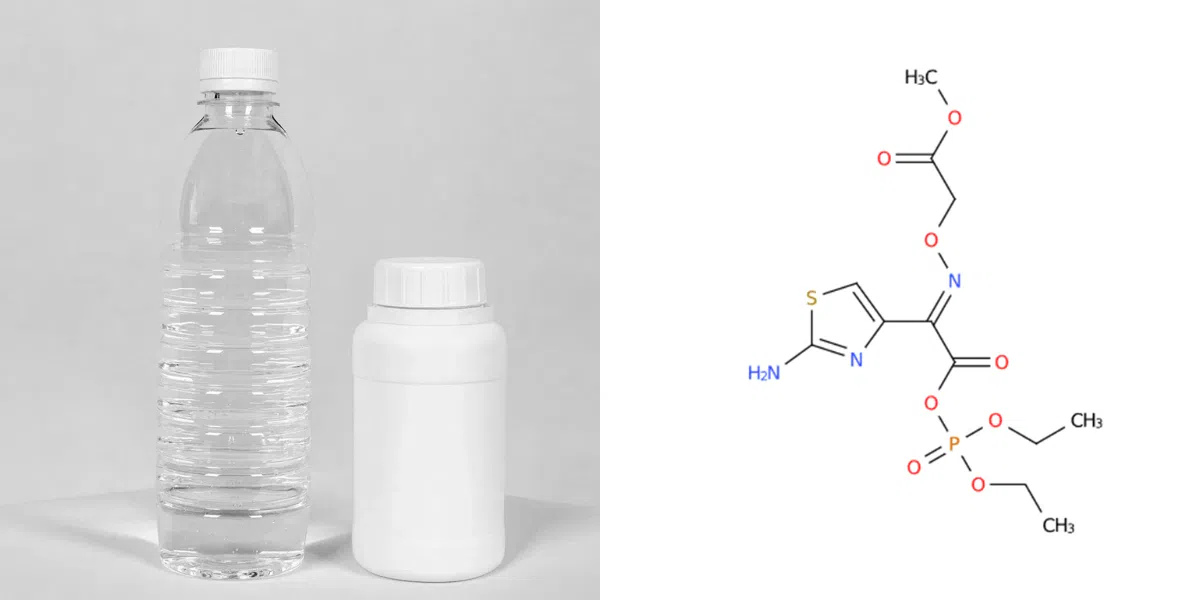
| English Synonyms | O,O-DIETHYLPHOSPHORYL (Z)-2-(2-AMINOTHIAZOL-4-YL)-2-METHOXYCARBONYLMETHOXYIMINOACETA TE;PMMA;POLY(METHYL METHACRYLATE), ISOTACTIC, AV ERAGE MW CA. 300,000 (GPC);PMMA:O,O-DIETH YLPHOSPHORYL (Z)-2-(2-AMINOTHIAZOL-4-YL)-2-METHOXYCARBONYLMETHOXYIMINOACETATE;Poly(m ethyl methacrylate), isotactic >80% isotactic;PMMA(8N);PMMA(ZK5BR);PMMA(ZK6HF) |
| CAS Number | 25188-98-1 |
| Molecular Formula | C12H18N3O8PS |
| Molecular Weight | 395.325381 |
| Melting point | 140-160 °C |
| Density | 1.2 g/mL at 25 °C(lit.) |
| Form | solid |
| InChI | 1S/C12H18N3O8PS/c1-4-21-24(18,22-5-2)23-11(17)10(8-7-25-12(13)14-8)15-20-6-9(16)19-3/h7H,4-6H2,1 -3H3,(H2,13,14)/b15-10 |
| InChIKey | DOXUHDDTLHKPOE-GDNBJRDFSA-N |
| Smiles | [P](=O)(OCC)(OCC)OC(=O)\C(=N/OCC(=O)OC)\c1nc([s]c1)N |
Applications of Poly(methyl Methacrylate) (PMMA)
Poly(methyl methacrylate) (PMMA) is a high-performance transparent polymer widely used as a lightweight and durable alternative to glass. With its excellent optical clarity, weather resistance, and easy processing characteristics, PMMA is suitable for a broad range of industrial and commercial applications.
Transparent Materials and Optical Applications
PMMA is commonly used in the production of transparent sheets, panels, lenses, display components, and other optical products that require high light transmission and excellent appearance.
Medical and Healthcare Applications
Due to its good transparency, biocompatibility, and processing flexibility, PMMA is utilized in various medical devices and healthcare-related products.
Construction and Decorative Applications
PMMA is widely applied in architectural materials, lighting covers, signage, interior decoration, and creative crafts, providing both functional performance and aesthetic appeal.
Industrial and Consumer Products
Its lightweight structure, durability, and resistance to environmental factors make PMMA an important material for automotive components, household products, and specialty plastic applications.
With its combination of optical performance, mechanical strength, and versatile processing properties, PMMA continues to be a valuable material across multiple industries.