

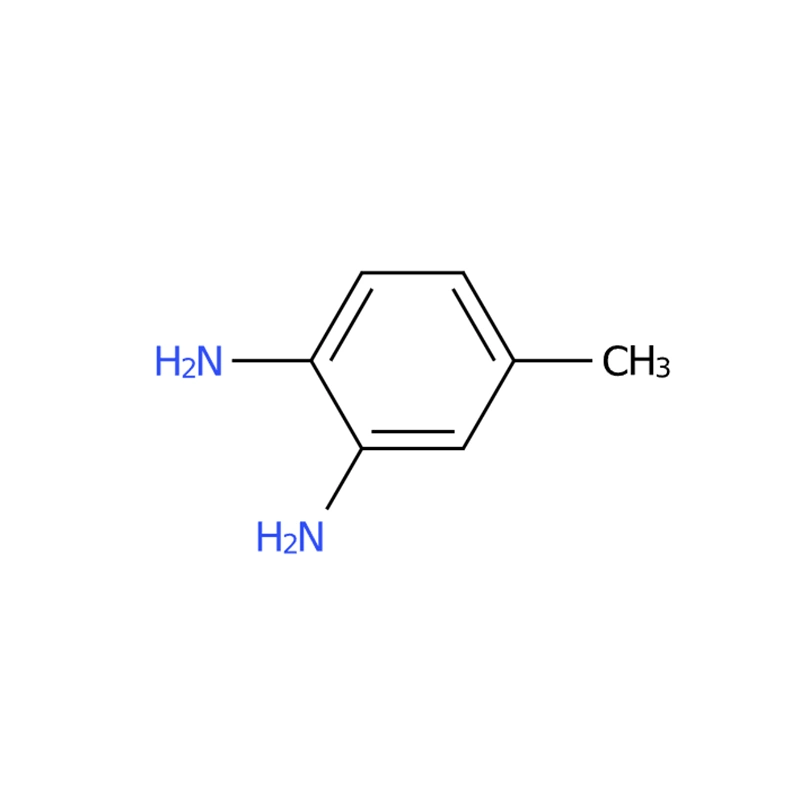
Product Description:
3,4-Diaminotoluene, also known as 4-Methyl-1,2-phenylenediamine, is an aromatic diamine compound with high synthetic value. It is slightly soluble in cold water and exhibits good reactivity due to its amino groups. As a crucial building block in organic chemistry, it plays an important role in the development of dyes and other fine chemical intermediates.
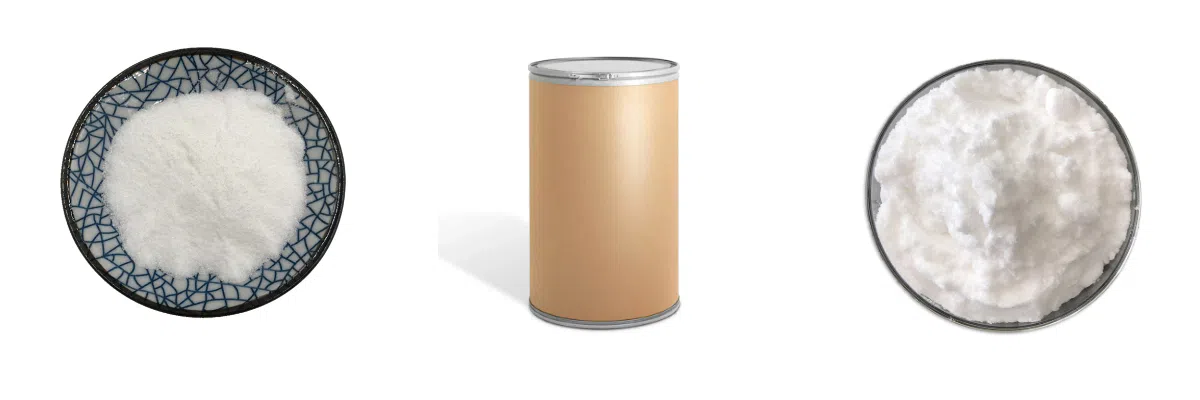
3,4-Diaminotoluene Chemical Properties
| Melting point | 87-89 °C (lit.) |
| Boiling point | 155-156 °C/18 mmHg (lit.) |
| density | 1.2207 (rough estimate) |
| refractive index | 1.5103 (estimate) |
| Fp | 155-156°C/18mm |
| storage temp. | Keep in dark place,Inert atmosphere,Room temperature |
| solubility | Chloroform (Sparingly), Methanol (Slightly) |
| pka | 4.59±0.10(Predicted) |
| form | Crystalline Chunks or Flakes |
| color | Brown to grayish-brown |
| Water Solubility | 16 g/L (20 ºC) |
| BRN | 507965 |
| Stability: | Stable. Incompatible with strong oxidizing agents. |
| CAS DataBase Reference | 496-72-0(CAS DataBase Reference) |
| NIST Chemistry Reference | 1,2-Benzenediamine, 4-methyl-(496-72-0) |
| EPA Substance Registry System | 3,4-Diaminotoluene (496-72-0) |
| Hazard Codes | Xn |
| Risk Statements | 20/21/22-36/37/38-52/53-40-36-22 |
| Safety Statements | 26-37/39-61-36/37/39 |
| RIDADR | UN 2811 |
| WGK Germany | 2 |
| RTECS | XS9820000 |
| TSCA | Yes |
| HazardClass | 6.1(b) |
| PackingGroup | III |
| HS Code | 29215119 |
| Hazardous Substances Data | 496-72-0(Hazardous Substances Data) |
Product Application of 3,4-Diaminotoluene CAS#496-72-0
3,4-Diaminotoluene is a valuable aromatic amine intermediate with broad applications in the chemical industry. It is mainly used as a key raw material for the synthesis of high-performance organic pigments, including Disperse Fluorescent Yellow, contributing to the production of vibrant and stable colorants.
In addition, it serves as an effective intermediate in organic synthesis, supporting the manufacture of various dye intermediates, specialty chemicals, and synthetic metal complexes. Due to its reactive amino groups, it can also be utilized in the preparation of corrosion inhibitors and rust-preventive agents, helping improve material protection performance.
Furthermore, 3,4-Diaminotoluene can participate in the synthesis of metal-containing compounds involving silver, copper, lead, nickel, and zinc, making it a versatile building block for applications in pigments, coatings, chemical synthesis, and advanced material fields.