
Product Description of Palatinose (Isomaltulose)
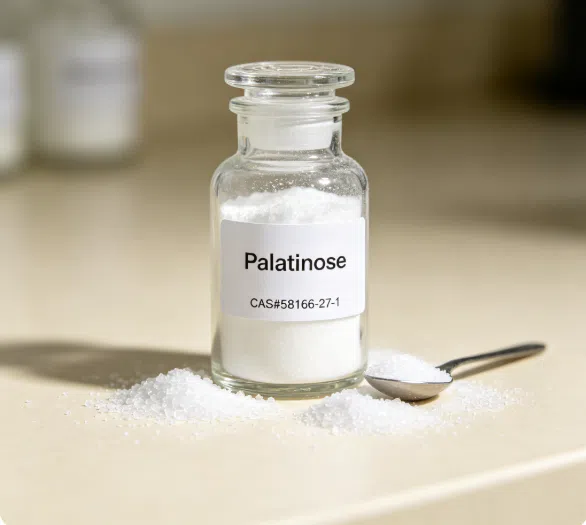
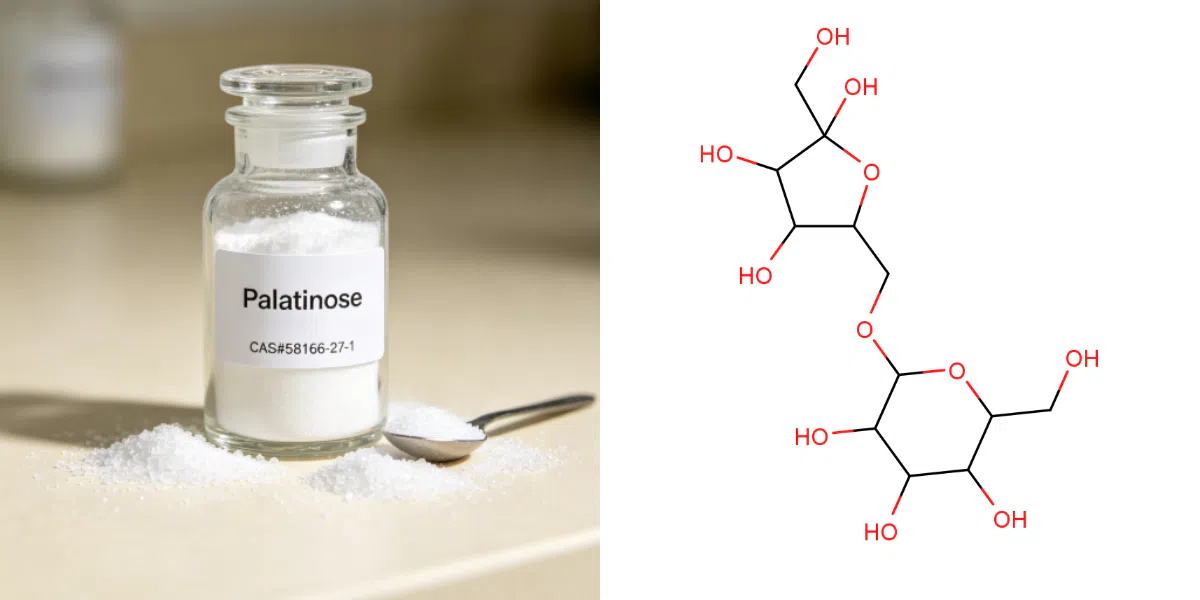
Palatinose(CAS#58166-27-1), also known as isomaltulose, is a natural functional disaccharide produced from sucrose through enzymatic transformation using α-glucosyltransferase. This biotechnology-based process modifies the molecular linkage of sucrose by converting the original α-1,2 glycosidic bond between glucose and fructose into an α-1,6 linkage, creating a sucrose isomer with unique functional properties.
As a glucose-fructose disaccharide, palatinose provides a mild sweetness profile while offering improved stability compared with traditional sucrose. It appears as white, odorless crystalline powder and has a molecular weight of approximately 360.32, containing one molecule of crystal water. With low hygroscopicity, good acid resistance, and lower solubility and viscosity than sucrose, palatinose is widely used in functional foods, beverages, nutritional products, and sugar-reduction formulations.
Modern production of palatinose is achieved through immobilized enzyme or cell biotechnology, enabling efficient conversion of sucrose into a high-purity functional sweetener with consistent quality.
Palatinose Chemical Properties
| Melting point | 125-128°C |
| Alpha | 100 º (c=2, H2O) |
| Boiling point | 684.1±55.0 °C(Predicted) |
| Density | 1.77±0.1 g/cm3(Predicted) |
| Storage temp | Hygroscopic, -20°C Freezer, Under inert atmosphere |
| Solubility | DMSO (Slightly), Water (Slightly) |
| Form | Solid |
| Pka | 11.39±0.70(Predicted) |
| Color | White to Off-White |
| Safety Statements | 24/25 |
| HS Code | 29329990 |
Product Application of Palatinose (Isomaltulose)
Palatinose is a functional sweetener with mild sweetness, low hygroscopicity, excellent acid stability, and high resistance to fermentation by yeast and certain microorganisms. With a taste profile similar to sucrose, it can be used as a partial or complete sugar replacement in a wide range of food and beverage applications.
Due to its favorable functional characteristics, palatinose is widely incorporated into products such as beverages, dairy and frozen desserts, baked goods, confectionery, jams, fruit preparations, biscuits, bread, concentrated juices, and other sugar-reduced formulations. Its stability and processing compatibility make it a valuable ingredient for developing healthier food options.
After consumption, palatinose is slowly hydrolyzed into glucose and fructose in the small intestine through enzymatic action, resulting in gradual absorption and a more sustained energy release compared with sucrose. Its slower metabolic response helps support stable blood glucose management and makes it a suitable sweetening ingredient for specialized nutritional products, including formulations designed for people seeking controlled sugar intake.
In addition, palatinose is considered non-cariogenic, making it an attractive choice for products intended for children, adolescents, and consumers looking for alternatives to conventional sugars.