
Copper(II) phthalocyanine Chemical Properties
| Melting point | 600°C (dec.) |
| Density | 1.62[at 20℃] |
| Storage temp | Inert atmosphere,Room Temperature |
| Solubility | insoluble in H2O, ethanol; soluble in concHSO 4 |
| Colour Index | 74160 |
| Form | Fine Crystalline Powder |
| Color | Dark blue |
| Odor | odorless |
| Water Solubility | <0.1 g/100 mL at 20 ºC |
| λmax | 602nm(CHCl3)(lit.) |
| Hydrolytic Sensitivity | 4: no reaction with water under neutral conditions |
| Merck | 14,2520 |
| BRN | 4121848 |
| Exposure limits | ACGIH: TWA 1 mg/m3 NIOSH: IDLH 100 mg/m3; TWA 1 mg/m3 |
| InChIKey | XCJYREBRNVKWGJ-UHFFFAOYSA-N |
| LogP | -1 at 23℃ |
| NIST Chemistry Reference | Copper phthalocyanine(147-14-8) |
| EPA Substance Registry System | C.I. Pigment Blue 15 (147-14-8) |
| Absorption | λmax 678 nm (DMF) |
Safety Information
| Safety Statements | 22-24/25 |
| WGK Germany | - |
| RTECS | GL8510000 |
| TSCA | Yes |
| HS Code | 32041300 |
| Hazardous Substances Data | 147-14-8(Hazardous Substances Data) |
| Toxicity | LD50 intraperitoneal in rat: > 3gm/kg |
Product Overview
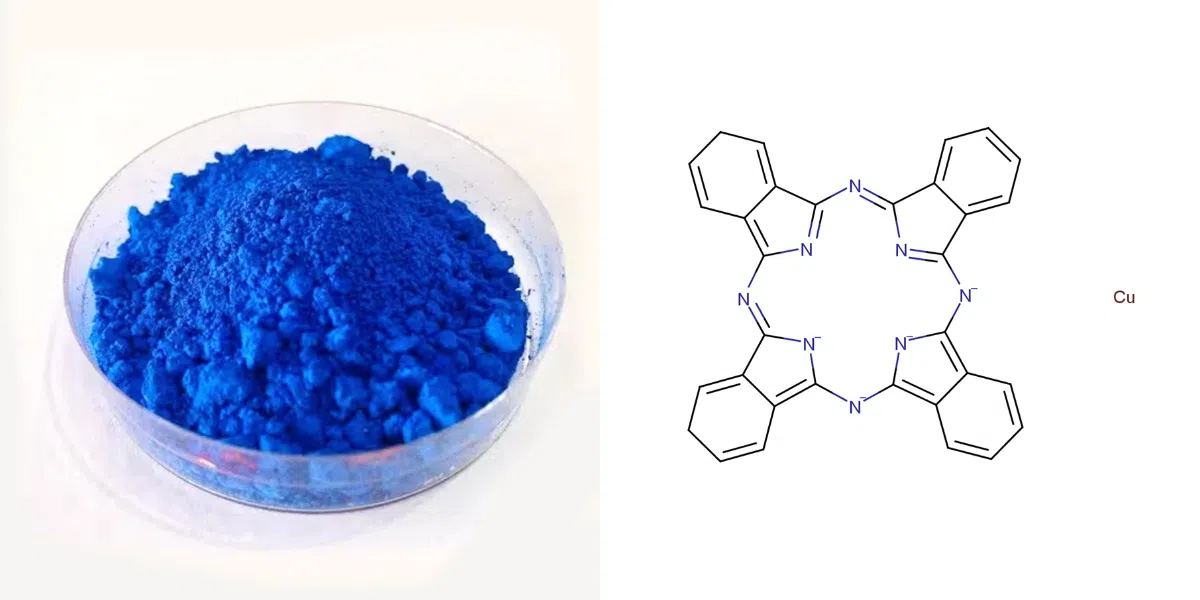
Copper(II) Phthalocyanine (CuPc, CAS#147-14-8) is a high-performance organic semiconductor material known for its excellent optical absorption, electrical properties, and chemical stability. It has been widely applied as a donor material in organic photovoltaic systems, particularly in combination with fullerene derivatives such as C60 and PCBM.
In vacuum-deposited organic solar cell devices, CuPc-based layers provide efficient charge generation and transport capabilities. Initial devices have achieved power conversion efficiencies of approximately 1%, while further improvements have been demonstrated through pentacene-doped CuPc structures.
With its outstanding semiconductor characteristics, stable performance, and broad application potential, Copper(II) Phthalocyanine is an important functional material for organic electronics, photovoltaic technologies, and next-generation flexible solar energy solutions.