

Product Description of Methyl Palmitate CAS#112-39-0
Methyl Palmitate is an ester compound formed from palmitic acid and methanol. It is naturally present in the essential oils and lipid components of various plants and serves as an important fatty acid derivative in chemical and biological research.
The compound has attracted attention due to its role in lipid metabolism studies and its interaction with cellular systems. Research using isolated cell models has indicated that Methyl Palmitate may influence certain cellular activities, including effects on phagocytic function and cell responses.
With its natural occurrence, stable chemical structure, and broad research value, Methyl Palmitate is utilized in biochemistry, natural product analysis, specialty chemicals, and scientific research applications.
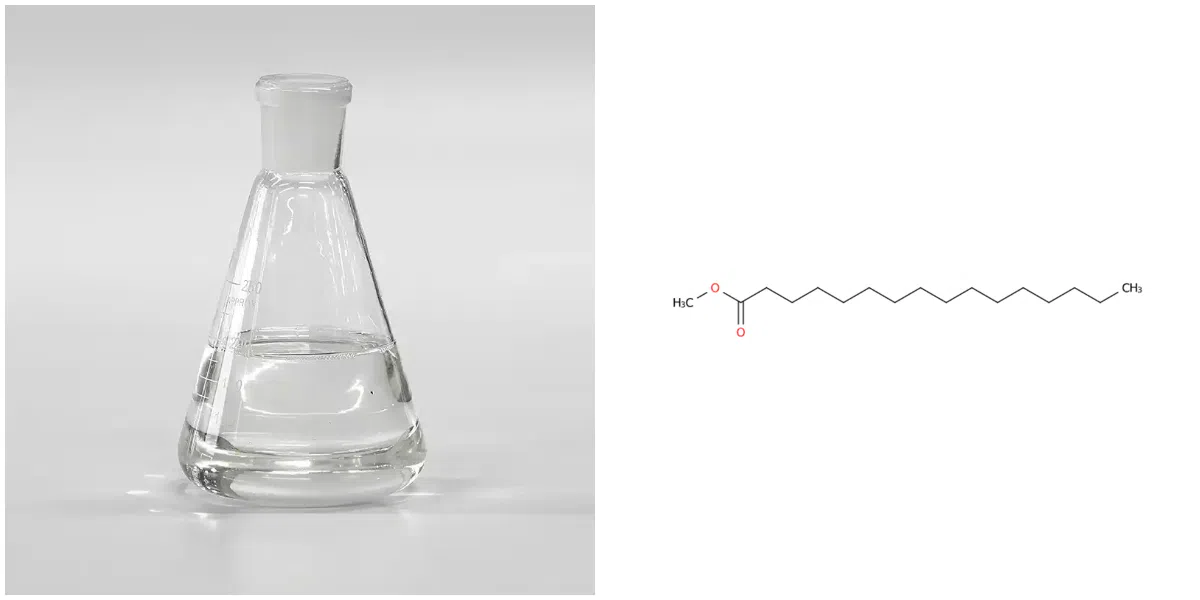
Methyl palmitate Chemical Properties
| Melting point | 32-35 °C (lit.) |
| Boiling point | 185 °C/10 mmHg (lit.) |
| Density | 0.852 g/mL at 25 °C (lit.) |
| Vapor pressure | 0.008Pa at 25℃ |
| Refractive index | n20/D 1.4512(lit.) |
| Fp | >230 °F |
| Storage temp | 2-8°C |
| Solubility | Chloroform (Sparingly), Methanol (Slightly) |
| Form | Liquid or Low Melting Solid |
| Specific Gravity | 0.852 |
| Color | Clear colorless |
| Odor | at 100.00 %. oily waxy fatty orris |
| Odor Type | waxy |
| biological source | plant (palm) |
| Water Solubility | INSOLUBLE |
| BRN | 1780973 |
| LogP | 7.38 at 36℃ |
| CAS DataBase Reference | 112-39-0(CAS DataBase Reference) |
| NIST Chemistry Reference | Hexadecanoic acid, methyl ester(112-39-0) |
| EPA Substance Registry System | Methyl palmitate (112-39-0) |
Safety Information
| Safety Statements | 22-24/25 |
| WGK Germany | 1 |
| TSCA | Yes |
| HS Code | 29157090 |
| Hazardous Substances Data | 112-39-0(Hazardous Substances Data) |
Product Application of Methyl Palmitate CAS#112-39-0
Methyl Palmitate is an important fatty acid ester derivative widely used as a functional ingredient in various industrial applications. It serves as a raw material in the production of detergents, emulsifiers, wetting agents, stabilizers, resins, lubricants, plasticizers, and animal feed additives, offering excellent versatility in formulation and manufacturing processes.
In biochemical and biomedical research, Methyl Palmitate has attracted attention due to its potential anti-inflammatory and anti-fibrotic activities. Experimental studies have suggested that it may help regulate inflammatory responses and reduce fibrosis-related processes in biological models.
Research has indicated that Methyl Palmitate may provide protective effects against bleomycin-induced pulmonary inflammation and fibrosis as well as carbon tetrachloride-induced liver fibrosis. These effects are associated with the regulation of transforming growth factor beta (TGF-β), an important signaling protein involved in cell growth, differentiation, and tissue remodeling.
Due to its broad industrial applicability and potential biological activity, Methyl Palmitate is utilized in chemical manufacturing, formulation development, and scientific research fields.