
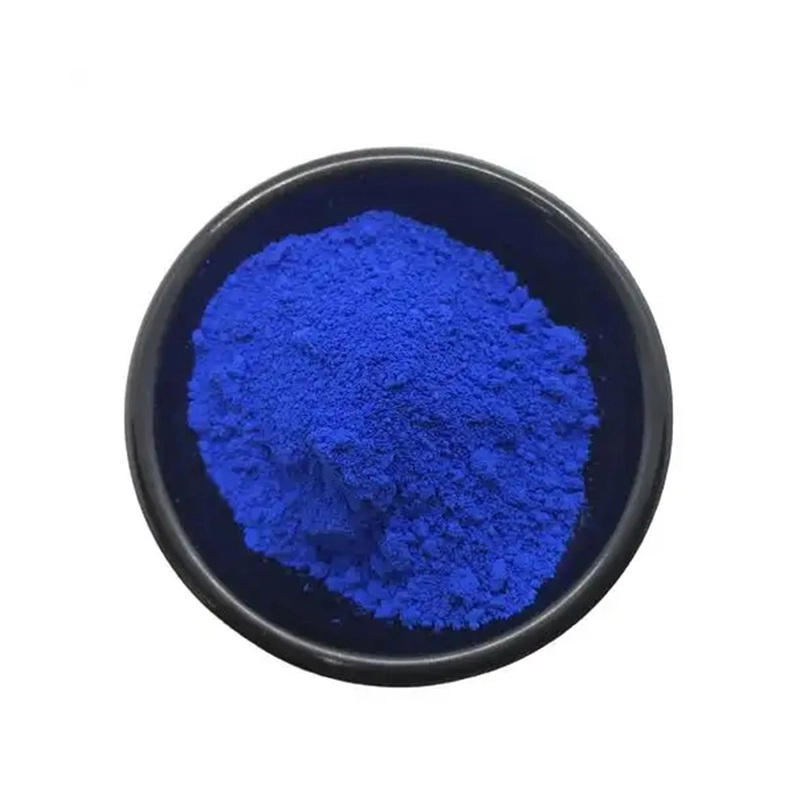
Product Description of Methylene Blue (CAS#61-73-4)
Methylene Blue is a water-soluble thiazine dye compound with notable redox activity and biological compatibility. It can easily dissolve in water and penetrate biological membranes, enabling its use across medical, biochemical, and research fields.
Since its discovery in the 19th century, Methylene Blue has become an important chemical reagent widely applied in biological staining, microbiological analysis, and biochemical studies. It functions as a staining agent for visualizing biological structures and as a redox indicator in laboratory research.
In the medical field, Methylene Blue is utilized as a therapeutic agent for specific clinical conditions, particularly in the treatment of methemoglobinemia associated with toxic substances. Its unique chemical properties and broad functionality make it a valuable compound in pharmaceutical, diagnostic, and scientific research applications.
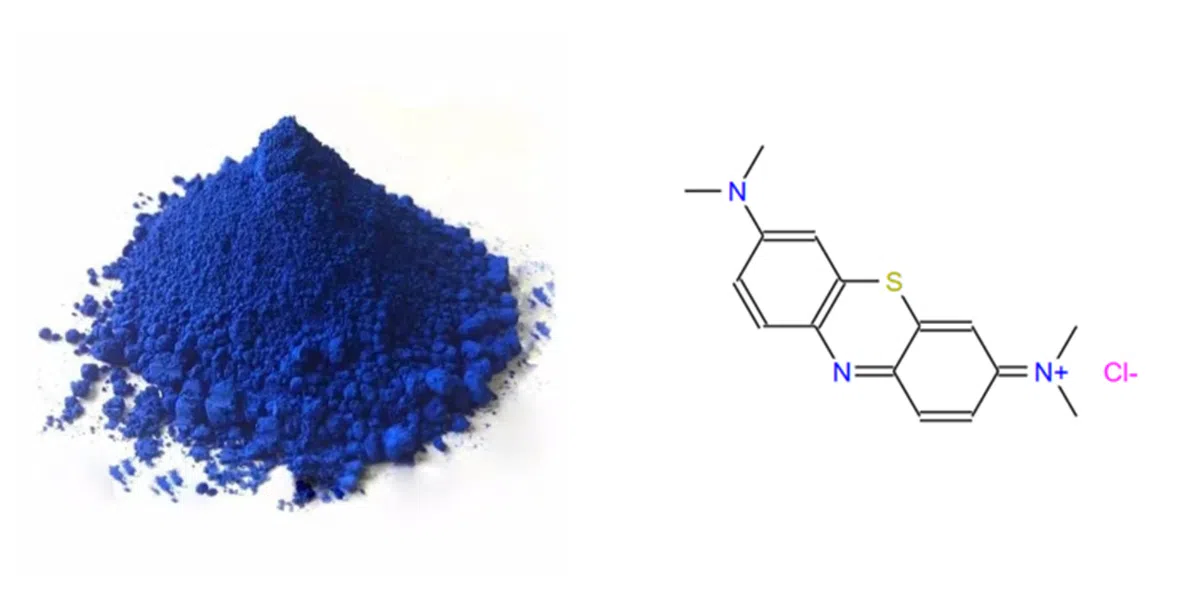
Methylene Blue Chemical Properties
| Melting point | 190 °C (dec.)(lit.) |
| Density | 1.0 g/mL at 20 °C |
| Refractive index | n20/D1.347 |
| Fp | 45 °C |
| Storage temp | room temp |
| Solubility | Soluble in water, ethanol, ethylene glycol, methyl cellosolve |
| Form | Liquid |
| Pka | 2.6, 11.2(at 25℃) |
| Colour Index | 52015 |
| color | Green |
| Specific Gravity | 0.98 |
| Odor | Odorless |
| Water Solubility | 40 g/L (20 ºC) |
| λmax | 661 nm |
| Merck | 146060 |
| BRN | 3641570 |
| Biological Applications | Detecting microorganisms; treating diabetic retinopathy,macular degeneration,malignant uveal melanomas, erysipelas,hidradenitis suppurativa,inflammation,skin diseases |
| NIST Chemistry Reference | Methylene blue(61-73-4) |
| EPA Substance Registry System | Methylene blue (61-73-4) |
Safety Information
| Hazard Codes | Xn |
| Risk Statements | 10-41-22-20/21/22-36/37/38 |
| Safety Statements | 26-39-36 |
| RIDADR | UN 1993 3/PG 3 |
| WGK Germany | 3 |
| RTECS | SP5740000 |
| HS Code | 32049010 |
| Hazardous Substances Data | 61-73-4(Hazardous Substances Data) |
| Toxicity | LD50 oral in rat: 1180mg/kg |
Product Application of Methylene Blue (CAS#61-73-4)
Methylene Blue is a redox-active dye that exhibits a characteristic color change depending on its oxidation state. In its oxidized form, it appears blue, while in its reduced form, it becomes colorless. This property makes it valuable in biological and biochemical applications.
In microbiological studies, Methylene Blue is commonly used for yeast cell viability staining. Living yeast cells with active metabolism generate reducing substances that convert blue oxidized Methylene Blue into its colorless reduced form. In contrast, cells with low metabolic activity or non-viable cells cannot provide sufficient reducing capacity and remain blue or light blue. This technique enables researchers to observe yeast cell morphology while distinguishing between living and inactive cells.
Beyond biological applications, Methylene Blue is widely used as a coloring agent and dye intermediate. It is applied in the dyeing of linen, silk, paper, bamboo, and wood, as well as in the production of inks and pigment preparations. It is also utilized for staining biological tissues and bacterial samples in laboratory research.
Additionally, Methylene Blue can be combined with other basic dyes to create composite colorants, such as basic royal blue, which is produced by blending Methylene Blue with Basic Violet 5BN and yellow dextrin in specific proportions.
Due to its unique coloration, redox behavior, and biological compatibility, Methylene Blue has broad applications in textile dyeing, biological staining, chemical analysis, and industrial colorant production.