

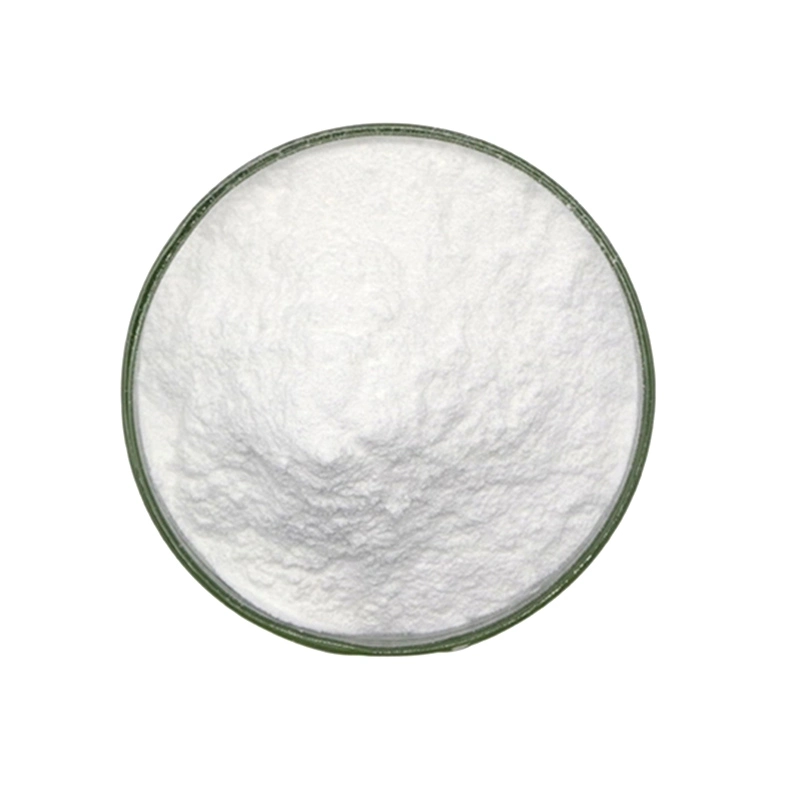
Product Description of L-Arginine L-Glutamate CAS#4320-30-3
L-Arginine L-Glutamate is an amino acid derivative composed of L-arginine and L-glutamic acid. It appears as a white powder or crystalline solid, with a mild or no noticeable odor and a specific characteristic taste.
The compound exhibits good stability under standard storage conditions and undergoes decomposition when heated to approximately 193–194.6°C. In a 25% aqueous solution, every 100 mL contains approximately 13.5 g of L-arginine and 11.5 g of L-glutamic acid, providing a concentrated amino acid source.
Due to its amino acid composition, stable crystal structure, and favorable physicochemical properties, L-Arginine L-Glutamate is widely studied and applied in nutritional formulations, biochemical research, pharmaceutical-related applications, and specialty health products.
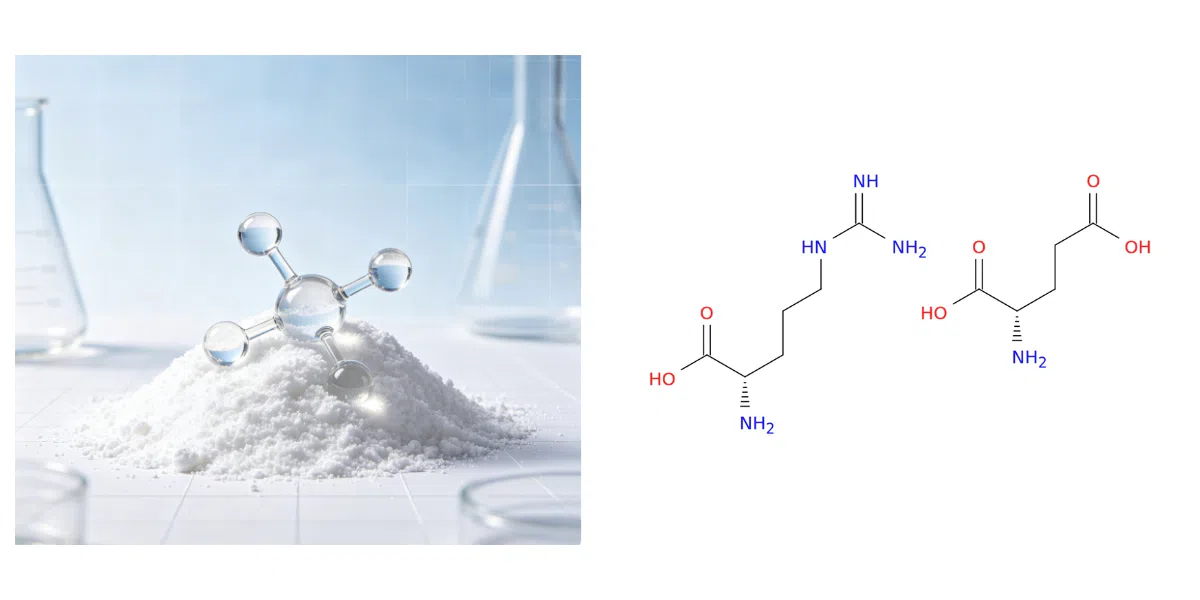
L-Arginine L-glutamate Chemical Properties
| Melting point | >185°C (dec.) |
| Storage temp. | −20°C |
| Solubility | Aqueous Acid (Sparingly), Water (Slightly) |
| Form | Solid |
| Color | White to Off-White |
| Odor | odorless |
| LogP | -1.287 (est) |
| CAS DataBase Reference | 4320-30-3(CAS DataBase Reference) |
| EPA Substance Registry System | L-Glutamic acid compd. with L-Arginine (1:1) (4320-30-3) |
| WGK Germany | 3 |
Product Application of L-Arginine L-Glutamate CAS#4320-30-3
L-Arginine L-Glutamate is commonly used as a functional flavor enhancer in food applications, particularly for improving and balancing the taste profile of beverages such as green tea products. It is typically added at low concentrations to enhance flavor richness and mouthfeel.
As a combination of L-arginine and L-glutamic acid, this compound provides valuable amino acid components. Although both amino acids are generally synthesized by the human body, they may become conditionally essential nutrients during certain stages of development, especially in infants and young children whose ability to produce sufficient L-arginine is limited.
L-Arginine plays an important role in various physiological processes and has been studied for its potential benefits in nutritional support and biomedical applications, including research related to eye health and retinal function.
Due to its amino acid properties and functional characteristics, L-Arginine L-Glutamate is applied in areas such as food additives, nutritional formulations, pharmaceutical research, and health-related products.