
Product Description of Sodium Amide CAS No. 7782-92-5
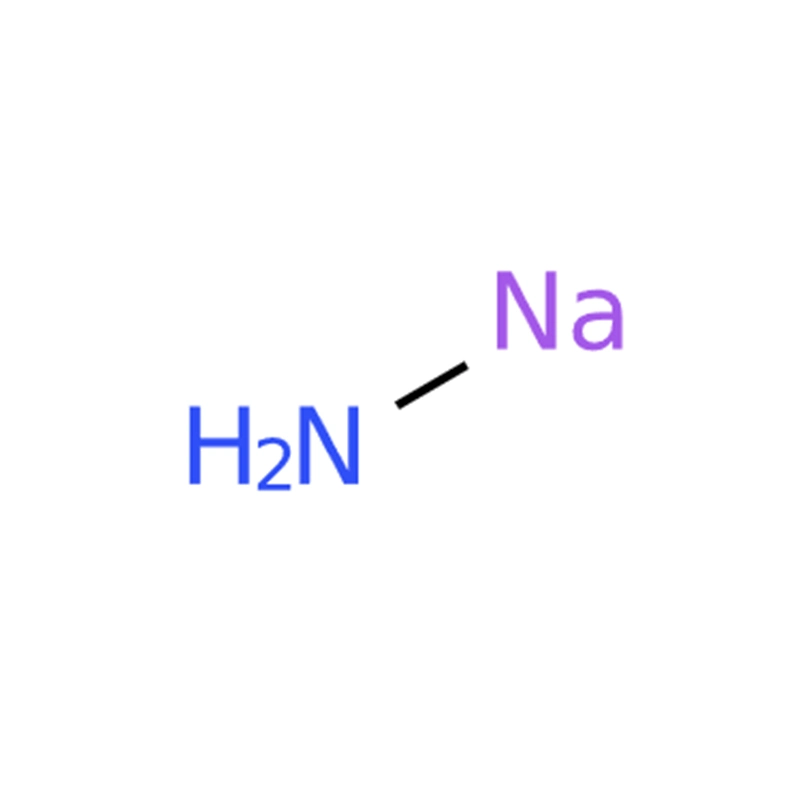
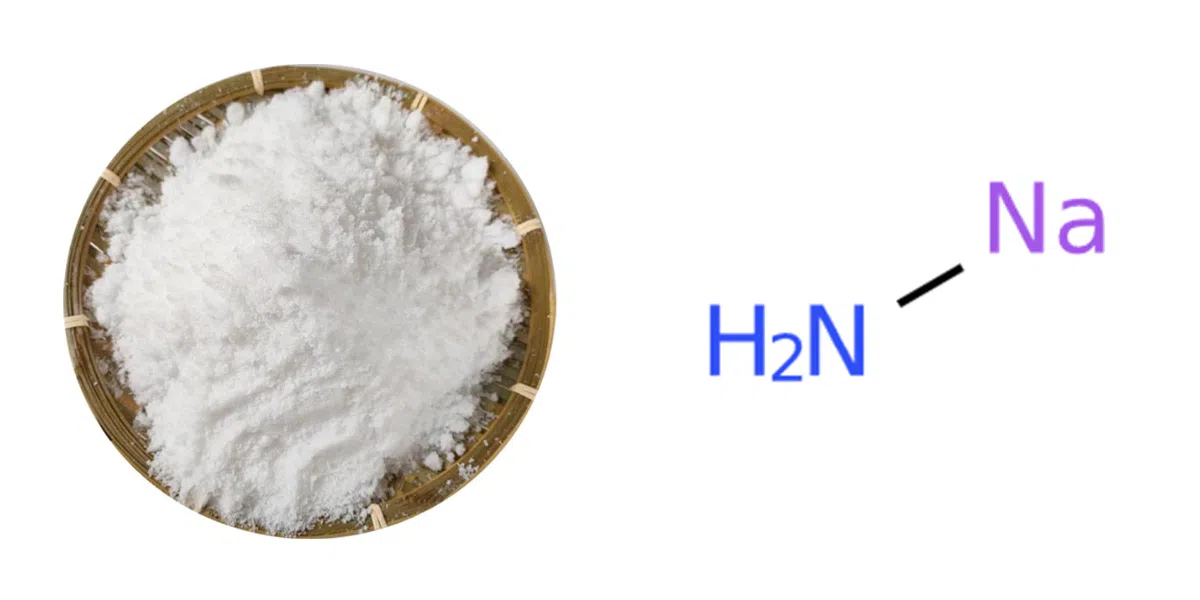
Sodium Amide, commonly referred to as sodium amide or sodamide, is an inorganic chemical compound that typically appears as a white to olive-green crystalline powder with a characteristic ammonia-like smell. Its molecular formula is NaNH₂, and its molecular weight is 39.01 g/mol. It has a melting point of approximately 210°C and a boiling point of around 400°C. At elevated temperatures of 500–600°C, it undergoes thermal decomposition, producing sodium, nitrogen, and hydrogen. Sodium Amide reacts strongly with water, generating sodium hydroxide and ammonia gas. It is slightly soluble in liquid ammonia and reacts gradually with alcohols.
Due to its strong affinity for atmospheric moisture and carbon dioxide, Sodium Amide requires careful handling and airtight storage. In the molten state, it exhibits the ability to dissolve certain metals, including magnesium, zinc, molybdenum, and tungsten, as well as inorganic materials such as quartz, glass, and silicates. Structurally, it is an ionic compound consisting of sodium cations (Na⁺) and amide anions (NH₂⁻), with the latter derived from ammonia through the replacement of one hydrogen atom.
Sodium Amide is characterized by its strong alkalinity, high chemical reactivity, and moisture sensitivity. It is classified as a flammable and corrosive substance and may present an explosion hazard under certain conditions. Its amide ions readily react with water, forming sodium hydroxide and releasing ammonia according to the following chemical equation:
NaNH₂ + H₂O → NaOH + NH₃
The compound is soluble in liquid ammonia and hot ethanol. Exposure to Sodium Amide dust may cause significant irritation or injury to the skin, eyes, and respiratory tract. Direct contact can result in serious chemical burns. Appropriate protective equipment, controlled handling procedures, and suitable storage conditions are essential when working with this material.
In the chemical and pharmaceutical industries, Sodium Amide is an important reagent for organic synthesis and chemical processing. Its applications include amination, condensation, dehydration, dehalogenation, alkylation, and polymerization reactions. It also serves as an important intermediate or starting material in the manufacture of various chemical products, including hydrazine, sodium cyanide, azides, cyanides, and indigo.
When expos
ed to atmospheric oxygen, Sodium Amide can undergo oxidation, resulting in the formation of a yellowish surface layer. Certain oxidation products may be sensitive to heat, impact, or friction, creating additional safety risks. Under vacuum heating conditions at approximately 300–330°C, Sodium Amide can undergo decomposition, generating nitrogen, sodium, hydrogen, and ammonia. For this reason, the product should be kept in tightly sealed containers under an appropriate inert atmosphere, away from moisture, air, heat, and potential ignition sources.
From a manufacturing perspective, Sodium Amide is commonly produced through the reaction of molten sodium metal with ammonia gas at temperatures ranging from 300°C to 400°C. For laboratory preparation, it can also be obtained through the reaction of sodium with liquid ammonia in the presence of a suitable catalyst at room temperature. Additionally, Sodium Amide reacts with carbon monoxide to form sodium cyanide, making it a valuable compound in industrial chemical synthesis and downstream manufacturing processes.
Sodium amide Chemical Properties
| Melting point | 210 °C (lit.) |
| Boiling point | 400 °C (lit.) |
| density | 1.39 g/cm3 (25℃) |
| Fp | 85 °F |
| storage temp. | Store below +30°C. |
| solubility | reacts with H2O |
| form | crystalline |
| color | Greyish white powder |
| Odor | Ammonia like |
| Water Solubility | REACTS VERY VIOLENTLY, EVEN EXPLOSIVELY |
| Sensitive | Air & Moisture Sensitive |
| Merck | 148576 |
| Stability: | Stability Flammable. Reacts violently with water producing very toxic fumes. In case of fire do not use water, but instead smother with soda ash. May form explosive peroxides if heated, or if stored for extended periods in contact with air or oxygen. Incompatible with water and aqueous solutions, carbon dioxide, halogenated hydrocarbo |
| CAS DataBase Reference | 7782-92-5(CAS DataBase Reference) |
| EPA Substance Registry System | Sodium amide (Na(NH2)) (7782-92-5) |
| Hazard Codes | F,C,Xi,N |
| Risk Statements | 14/15-19-34-20/21-10-67-65-63-48/20-11-36/37-15/29-14-50-29 |
| Safety Statements | 26-43-45-62-7/8-43D-36/37/39-27-16-61 |
| RIDADR | UN 3129 4.3/PG 2 |
| WGK Germany | 2 |
| F | 37917 |
| Autoignition Temperature | 450 °C |
| TSCA | Yes |
| HS Code | 2853 90 90 |
| HazardClass | 4.3 |
| PackingGroup | II |
| Hazardous Substances Data | 7782-92-5(Hazardous Substances Data) |
Sodium Amide plays an important role in organic chemical synthesis, where it is commonly used to promote condensation reactions and facilitate the production of vitamin A. It also serves as a versatile chemical reagent in various processes, including dehydration, dehalogenation, alkylation, and amination.
When dissolved in liquid ammonia, Sodium Amide participates in ionic reactions involving ammonium ions and can be used in initiating anionic polymerization processes. Furthermore, it is widely utilized in organic synthesis and pharmaceutical chemical manufacturing as an important intermediate or reagent for preparing azide compounds, cyanides, indigo, hydrazine, and other specialty chemicals.